A different starting point
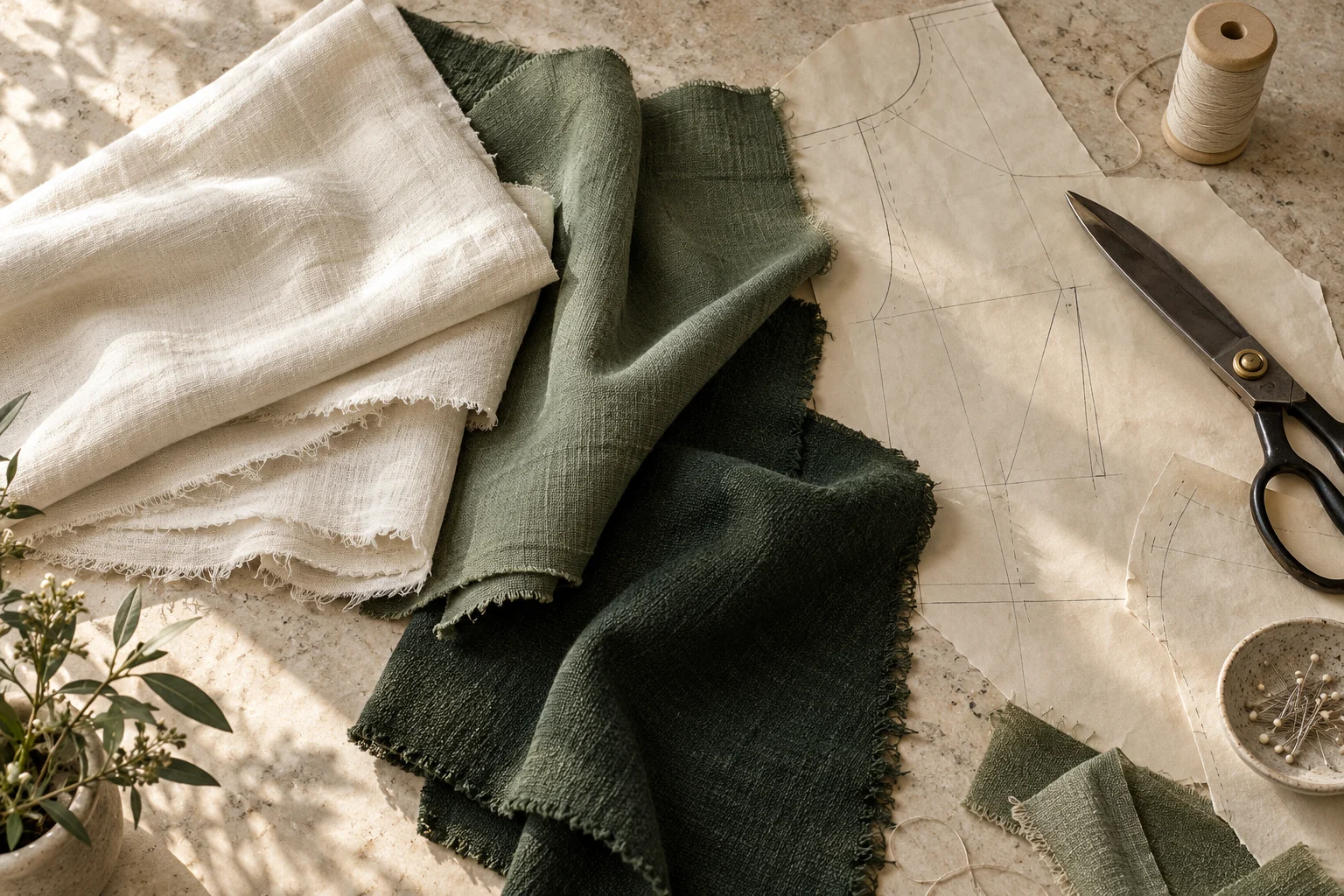
A new garment usually begins with a drawing and a search for fabric. Material-led development can reverse that sequence. A length of unused linen, a set of irregular textile pieces or a discontinued cloth becomes the first constraint. The question is then practical: what could this material become, and what would that require?
Circular fashion is useful as a direction for thinking about resources, use and continuation. It should not become a substitute for describing what actually happened. A garment may incorporate selected surplus fabric while still requiring conventional lining, thread and fastenings. That specific description tells a customer more than an unqualified environmental label.
What counts as surplus?
Surplus can include unused textile inventory, production remnants, cutting off-cuts or recoverable fabric components. These sources differ substantially. A continuous roll may support a coordinated group of garments; a collection of small pieces may suit panels or decorative work. Neither source is automatically appropriate simply because it is available.
The available history matters too. Composition, previous treatment and storage conditions may be documented, uncertain or entirely unknown. A responsible development conversation distinguishes confirmed information from assumptions. When critical performance information is missing, the project may need specialist testing, an alternative material or a narrower intended use.
Assess before you design
Material assessment connects the cloth to a particular product. Condition, cleanliness, dimensions, visible defects, durability and handling characteristics all influence the decision. A textile suitable for a decorative panel may not be suitable for a structured jacket. Stretch, weight, fraying and drape can change the construction approach.
Total usable area is different from total measured area. Damage, colour variation and irregular edges may reduce the portions that can be cut consistently. Pattern placement must work around those limitations. An early assessment helps avoid developing a silhouette that depends on lengths or widths the material cannot provide.
Assessment in a studio is not the same as laboratory certification. If an application needs formal performance evidence, that requirement should be identified before a design commitment. An appealing surface does not remove the need to consider how the finished garment will be worn and maintained.
Let constraints create a design language
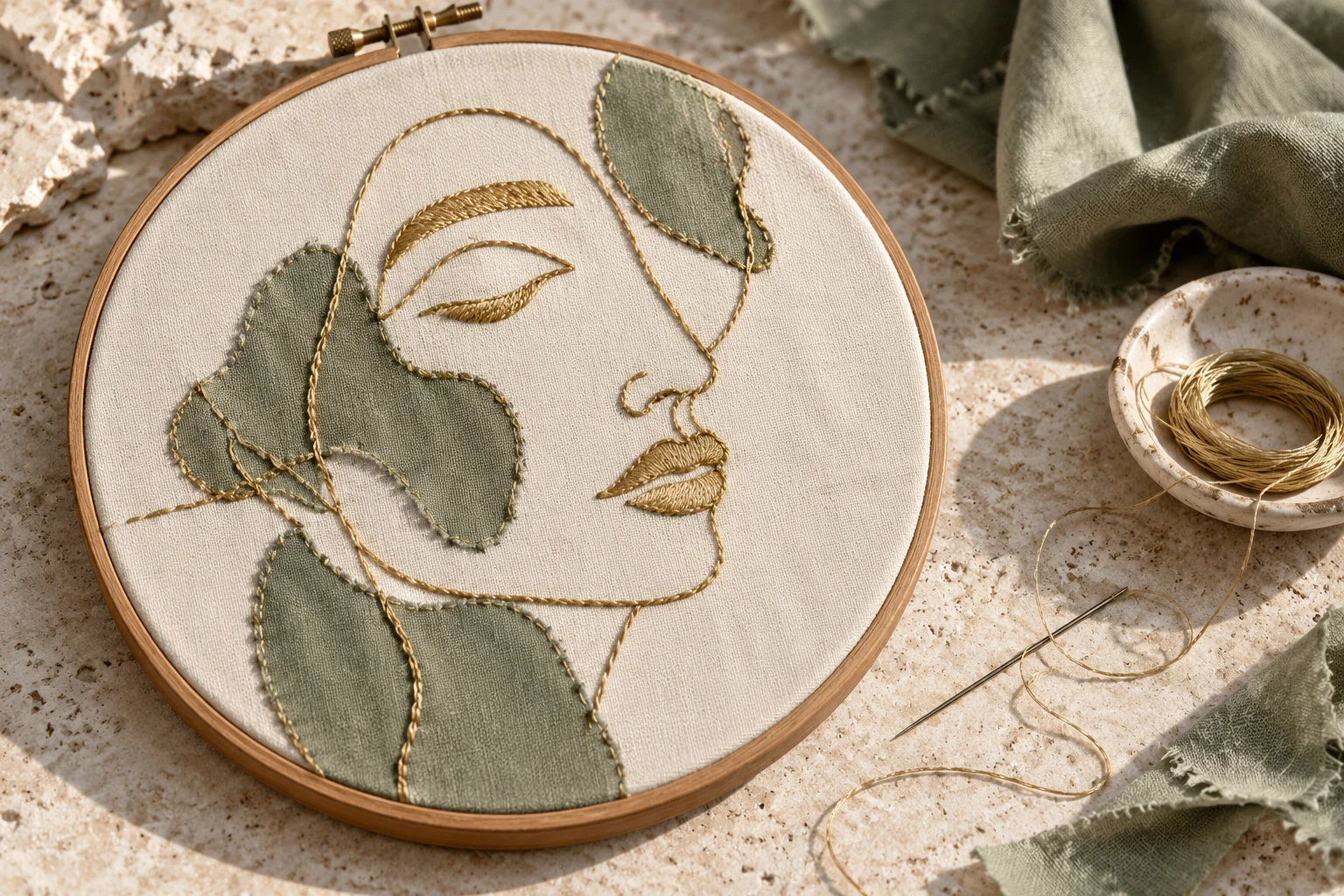
A restricted material supply can become part of the visual direction. Panel seams may follow the usable dimensions of the cloth. Related colours can be combined deliberately rather than forced into an imitation of a uniform fabric. Textile artwork and appliqué may connect separate pieces within a coherent garment.
This does not mean every irregularity should become a feature. A weak area, an unstable edge or an unsuitable weight may create a construction problem that styling cannot resolve. Design freedom works best when it has a clear boundary: the garment still needs to meet its intended requirements for fit, function and durability.
Samples make the questions tangible
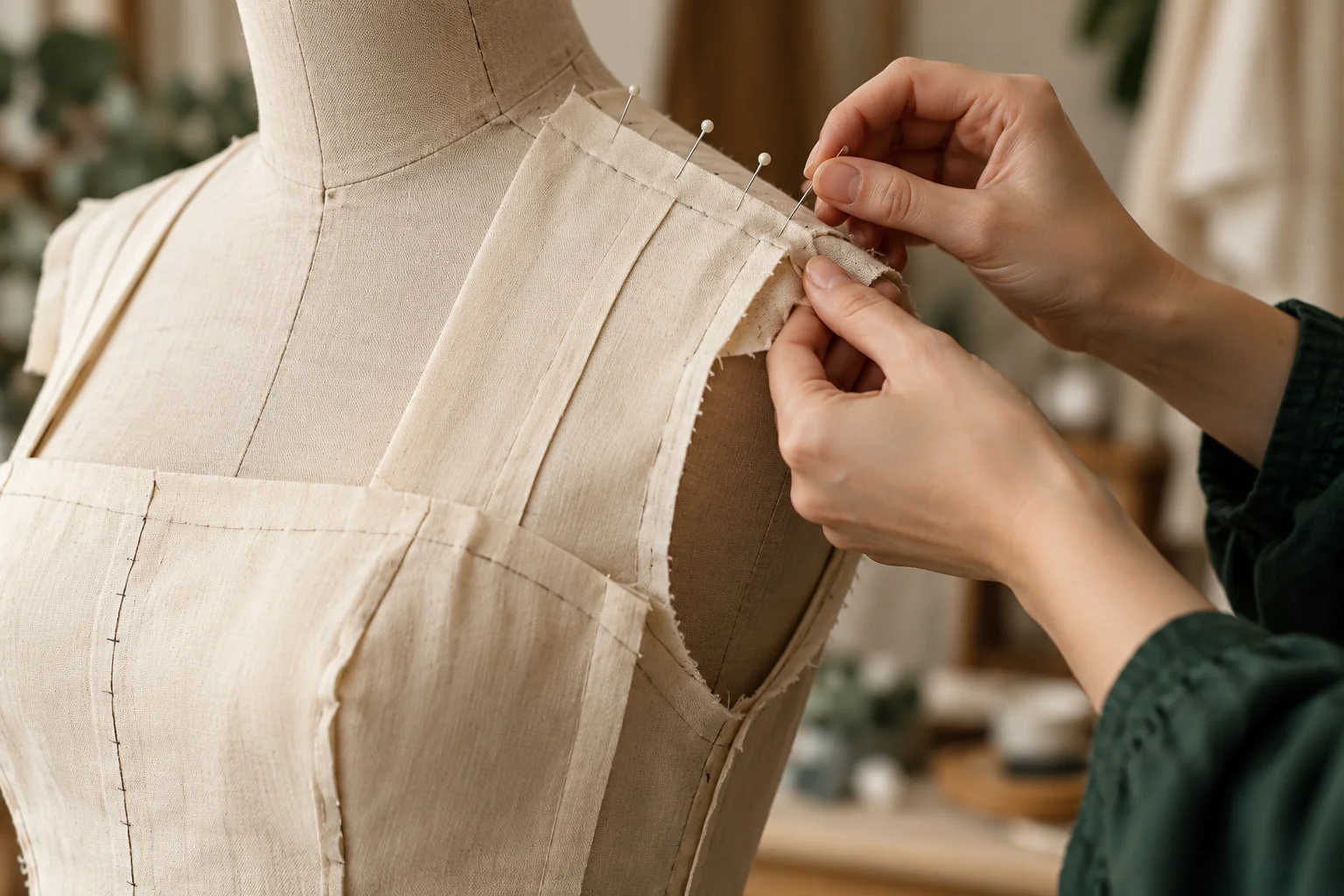
A drawing cannot fully explain the effect of a layered seam or the behaviour of embroidery on a particular cloth. Test applications and prototypes can reveal bulk, distortion, movement restrictions and finishing difficulties. The sample stage gives the client and developer something specific to review before production.
Reviews should lead to recorded decisions. Which material placement is approved? Does a panel need reinforcement? Is the thread compatible with the fabric and intended care? If a change is needed, both the pattern and the construction information may need updating. Consistency between those records matters as much as the first visual impression.
Finite materials mean finite possibilities
A successful sample does not guarantee repeat supply. The cloth may support one garment, a small group or only selected details. Quantities should be based on usable materials and approved patterns rather than an optimistic estimate. If a customer expects reorders, that expectation belongs in the first discussion.
Alternative cloth may look similar while behaving differently. A later production run can therefore need another assessment or sample. It is better to describe a genuinely limited offering clearly than to imply that a material-led collection can be repeated without changes.
Evidence before environmental claims
Using surplus material describes an input decision. It does not, by itself, establish the total environmental impact of a finished garment. Additional processing, trims, transport, durability and actual use all affect the broader picture. Without an appropriate evidence base, precise savings or zero-waste promises would be misleading.
Clear product communication can remain modest and useful: identify the relevant material, explain where it is used and state any limitations. Care guidance should reflect what is known about the finished construction. Customers should be able to understand the garment without having to decode an ambitious sustainability slogan.
How POARE approaches the possibility
POARE’s developing studio model brings material assessment together with design, patterns, sampling and selected production. Suitable surplus textiles are considered alongside conventional materials. The aim is to match the cloth to the product rather than insist that every product use recovered inputs.
For a material-led inquiry, explain what textiles are available, their approximate dimensions, known composition and the intended garment. Include the proposed quantity and any fixed requirements. Explore circular textile assessment or prepare a project brief to organize the information for a future feasibility discussion.